
The Mental Load of Motherhood: Lightening the Burden

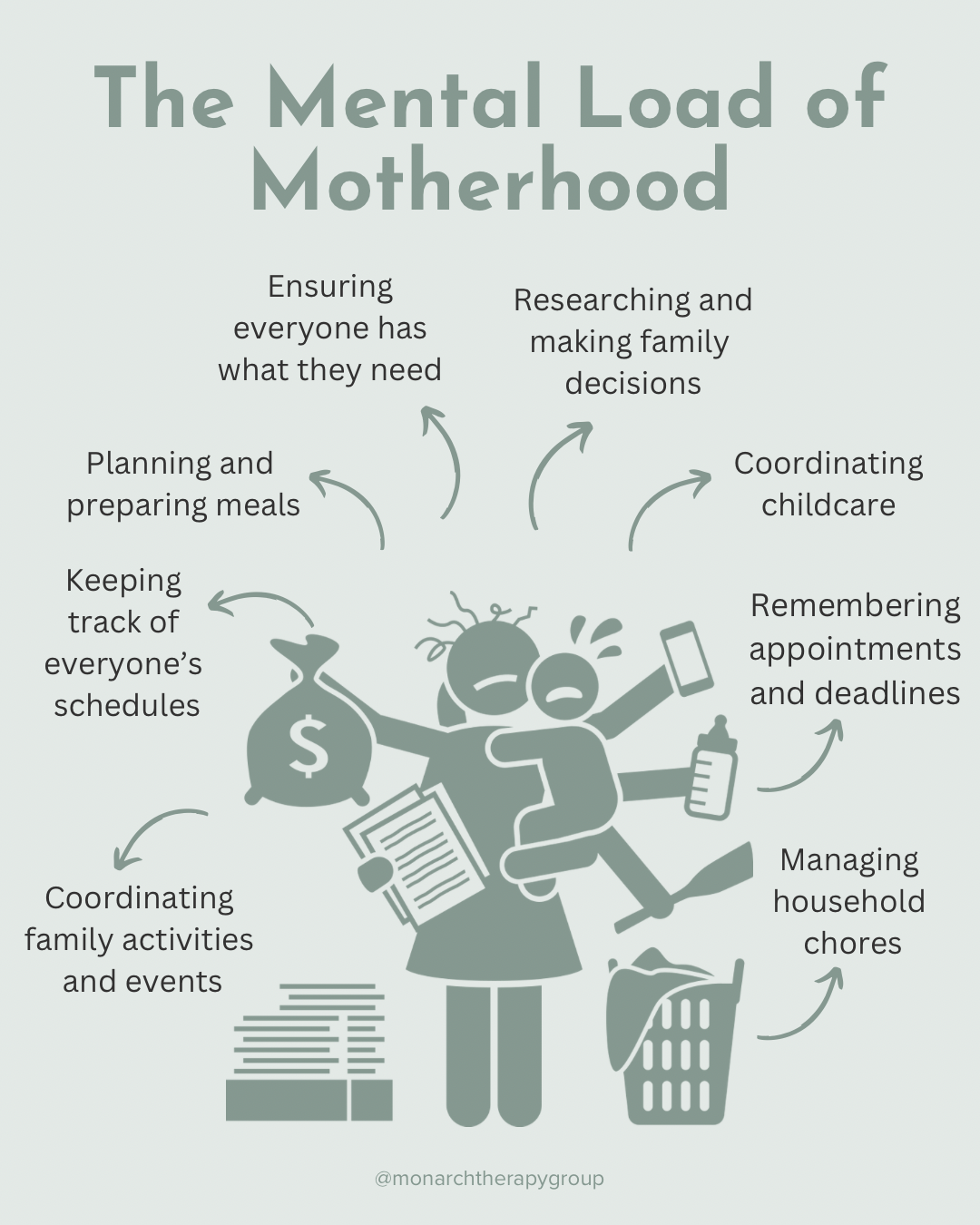
If you’ve ever felt like you’re drowning in a sea of endless mental to-do lists, constant chores, and the emotional needs of everyone in your household, you’re not alone. From the moment you wake up, your brain may already be scrolling through reminders—pack the lunches, RSVP to that birthday party, research which toothpaste to use, respond to that text message, put dinner in the crockpot—all while needing to be emotionally present for your family and friends.
Motherhood is one of life’s most rewarding roles, yet the quiet work of keeping everything afloat can leave you exhausted before the day even begins. That’s because you’re not just caring for little humans. You’re managing an entire system of planning, noticing, organizing, and feeling, often without anyone acknowledging how much you’re holding.
It’s called the Mental Load of Motherhood—the constant, invisible work of motherhood that never really stops. Understanding it is the first step toward lightening the weight.
What is the Mental Load of Motherhood?
Beyond household chores like washing dishes or folding laundry, the Mental Load of Motherhood refers to the unseen planning, organizing, and mental juggling mothers carry every day.
As maternal mental health specialist and author Erica Djossa describes it in her book “Releasing the Mother Load: How to Carry Less and Enjoy Motherhood More”, the Mother Load “isn’t just the dishes in the sink. It’s the thousand decisions you make before breakfast, the quiet monitoring of everyone’s moods, and the invisible safety net you create so your family can thrive.”
Think of it like having thousands of tabs open in your brain at once—constantly switching between them to keep everything running smoothly. It’s the engine of a car, quietly working behind the scenes to keep the whole family moving forward. While no one may see the gears turning, without this mental load, the day-to-day routines and responsibilities that hold a household together would quickly fall apart.
Take a baby’s nap schedule, for example. It can dictate when Mom eats, showers, or even leaves the house. She’s always anticipating what’s next: packing snacks before anyone gets hungry, remembering appointments, and noticing when someone’s running low on clean clothes or patience.
All of this constant planning and anticipating of needs is more than just physical work. One way to understand how much goes into the invisible load of motherhood is to divide it into three categories: physical, cognitive, and emotional labor.
The Three Types of Labor
Physical labor: the visible, hands-on tasks that keep the household running: meal prep, dishes, laundry, sweeping and mopping, grocery runs, nighttime routines, and the countless other small chores that fill the day from morning to night.
Cognitive or mental labor: According to the American Sociological Review, the term “cognitive labor” is defined as the responsibility of “anticipating needs, identifying options for filling them, making decisions, and monitoring progress”. In everyday life, that might look like researching the best products, scheduling and attending appointments, coordinating nap times, planning meals, and keeping track of everyone’s routines. This internal load requires constant attention but often goes unseen.
Emotional labor: the management of feelings and well-being of the members of your household. Moms often prioritize the emotional needs of their family while simultaneously juggling cognitive and physical tasks, making this the most draining part of the invisible load.
While all three types of labor are essential to keeping a household running, studies suggest that the burden of the invisible load is not always shared equally. One Wake Forest University study concluded that the mental load in heterosexual relationships falls largely on women, with mothers bearing significantly more of the work than their partners.
Shouldering this disproportionate load can leave mothers feeling anxious, exhausted, irritable, and emotionally drained.
When you start to notice just how much effort goes into every part of caring for your family, it’s easy to understand how heavy this load can feel.

What Makes the Load So Heavy?
Some tasks are never truly done. The term “perpetual chores” describes household tasks like dishes, meal prep, laundry, and general tidying that never feel “completed.” As soon as the dishwasher is emptied and the clothes are put away, another mountain of dirty dishes and laundry piles appear. Even after a full day of productivity, it’s easy to feel discouraged when the to-do list seems endless.
On top of that, the weight often comes from how rarely anything feels done. Tasks are constantly interrupted or undone within minutes, turning everyday life into a never-ending game of whack-a-mole. You get one thing in order, and something else immediately needs you. Even when you’re doing your best, it can feel like you’re always halfway through everything, and that unfinished feeling builds over time.
Another layer of heaviness comes from decision fatigue. Mothers make thousands of decisions a day—not just for themselves, but for everyone in the household. Even tiny choices add up, and by the end of the day, your brain is simply tired from having to think, respond, and choose for so many people at once.
But what makes all of this especially exhausting isn’t just the doing—it’s the thinking behind the doing. It’s in the invisible mental work running quietly in the background. Even something as simple as packing the diaper bag isn’t just packing the diaper bag. On the surface, it’s tossing in diapers and wipes. But in your mind, you’re tracking sizes, restocking supplies, checking the weather, and thinking through snacks, activities, and backup outfits, all while trying to prevent meltdowns before they happen.
Then come the micro-steps: reorganizing the bag, clearing out yesterday’s clutter, restocking what’s missing, and preparing it all again for the next day. It’s a constant cycle of managing, anticipating, and preparing—work that often goes unseen but never really stops.
This is the invisible load: the mental work wrapped around even the smallest task. It’s the constant anticipating, planning, and monitoring happening quietly in the background. That steady mental hum—one more reminder, one more decision, one more need—creates a level of overstimulation and exhaustion that can make even an “ordinary” day feel heavy.
What you’re carrying is real and valid. Naming this invisible work matters because it reminds you that the mental effort of mothering is just as demanding, and just as deserving of compassion, as the physical tasks everyone can see.
The Role of “Magic Maker”
On top of endless chores, there is the pressure to create the “magic” of childhood. From planning birthday parties, to upholding family traditions, and planning all the family fun, moms are often the magic makers carrying the weight of making every moment special.
But the truth is, what your kids will carry with them isn’t a perfectly planned day—it’s you. They’ll remember your laughter at breakfast, the calm moments before bedtime, and the small gestures of care when you were truly present, even for a few minutes.
Those small, everyday moments of care and connection are what make our children feel loved and secure. On the hard days, it’s okay to let go of the pressure to make things perfect and focus instead on simply being there. That presence is the kind of magic that lasts.
How to Map and Manage the Mental Load
Still, it can be hard to grasp just how much you’re carrying until you see it laid out in front of you. Every “simple” task often includes a dozen hidden steps and decisions. Erica Djossa’s Load Maps exercise helps mothers break down household responsibilities into pieces, making the mental labor more visible and easier to manage. By mapping out tasks this way, you can see not just the physical work, but the mental and cognitive effort behind every choice, and discover what can be simplified or shared.
Example: Doing the laundry
Anticipating:
Recognizing when laundry hampers are full and it’s time for a wash
Tracking what loads need to be done (darks, towels, bedding, etc.)
Paying attention to upcoming needs (school clothes, special events, seasonal changes)
Monitoring clothing sizes and sensory preferences
Keeping an eye on detergent and supply levels
Research and Planning:
Finding time in your schedule to wash, dry, fold, and put away clothes around daily routines (naps, meals, school pickup)
Deciding which loads to prioritize
Comparing and choosing detergents, stain removers, or fabric softeners (especially for sensitive skin)
Planning how and where clean and outgrown clothes will be stored
Managing:
Gathering laundry from hampers and sorting into loads
Washing, drying, folding, and putting clothes away
Handling interruptions and adjusting plans when needed
Removing clothes that are too small or out of season and preparing size-ups
Laying out clothing or preparing outfits for family members
Managing “emergency” laundry needs (spills, accidents, etc.)
Things I Can Release:
Can the laundry wait another day?
Does everything need to be folded or perfectly organized?
Do outfits need to be perfectly matching?
Things That Can Be Shared:
Can a partner, older child, or family member help fold or put away clothes?
Could someone else handle washing or switching loads?
What parts of the process can your partner learn to help with, like noticing when something is too small, where clothes are stored, or what each child likes?
Mapping tasks this way shows where the mental load is heaviest and where it can be shared or simplified.
Partner Check-In: Sharing the Load Together
Noticing the mental and emotional work of each task opens the door to healthier communication. Here’s a simple way to start that conversation with your partner:
“I’ve realized that a lot of the things I do each day, like laundry, meal prep, or keeping track of appointments, come with extra planning and decision-making that’s easy to overlook. It would really help me to share some of that load so it doesn’t all fall on one person. Can we talk about what tasks feel most manageable for each of us right now?”
“I’m feeling a little overwhelmed with everything on my plate. I want to make sure I have energy for the things that matter most to our family, so I need to step back from a few responsibilities. Let’s look at what we can simplify, hand off, or take turns with.”
These conversations aren’t about keeping score, but about creating a home where both partners feel supported, respected, and connected.
How to Lighten the Load
Prioritize, delegate, automate, and let go
One way to lighten the load is learning to prioritize what truly matters—and what doesn’t. Think of tasks through the glass ball vs. the bouncy ball analogy.
Glass balls: Critical tasks that are deeply important and can’t be dropped, like your child’s safety, your health, or nurturing meaningful connections. If you drop a glass ball, it could crack or shatter, so these require your attention and care.
Bouncy balls: Tasks that may feel urgent but aren’t essential, like perfectly folded laundry or Instagram-worthy lunches. If you drop a bouncy ball, it bounces. It may not be perfect, but life goes on.
By naming which tasks are glass and which are bouncy, you focus energy where it counts—and let the rest go. This is where delegating comes in. Delegating doesn’t mean tasks are done perfectly. The dishwasher may not be loaded perfectly, and the kids might go to school wearing mismatched socks. Remember: done is better than perfect. Releasing perfectionism allows you to embrace “good enough” mothering, where love and presence matter more than flawless execution.
Automate what you can with shared calendars, household subscriptions, or pre-scheduled self-care appointments. Over time, these small steps reclaim your mental space, allowing you to thrive, not just survive.

Challenging the Myth of Self-Care
A bubble bath or massage can soothe tired muscles, but they don’t address why you’re depleted. The myth of self-care in American culture suggests that quick fixes, like putting on a face mask or making a coffee run, can solve deeper challenges.
This type of “self-care” offers only temporary pleasure rather than lasting relief. True self-care goes beyond pampering yourself with new skincare products or a yoga class. It’s about creating real space to rest, reflect, and reset.
Take a moment to reflect on what you truly need. That might mean reassigning chores, hiring out, simplifying routines, or saying no to an extra commitment. It means letting some things be “good enough” rather than perfect.
Establishing these boundaries isn’t about doing less—it’s about protecting your energy so you can show up more fully for yourself and your family. When your boundaries are clear, others know what you can realistically take on, giving you the space to recharge and focus on what truly matters.
For more tips on setting healthy limits and creating space for self-care, check out my blog on setting boundaries here.
Remember: taking these steps isn’t indulgent or selfish, but rather, it’s essential for protecting your mental health.
Redefining What It Means to Be a Good Mom
Letting your values lead the way
Learning self-care is just the beginning. The real shift comes when you’re able to let go of society’s script and define what being a “good mom” truly means to you.
Take a moment to reflect on your core beliefs about motherhood. What does being a “good mom” mean to you? Is it a spotless home, healthy meals, well-behaved children, or meaningful milestones? Where did these expectations come from—childhood, family, society, or social media? Deconstructing these beliefs helps you see which are truly meaningful and which have outside influence.
Then, you can begin to identify the personal values that align with the family life you want to create.
The stronger you stand in your values, the easier it is to release the guilt, comparison, and pressure to be the “perfect” mom. Knowing your values helps guide your decisions like a map. Ask yourself, “Does this decision align with what matters most to me?” You can release the things that don’t really matter and direct your energy toward what truly does.
The real challenge isn’t comparing ourselves to other moms or chasing every parenting trend. It’s learning what truly matters to us, letting go of inherited expectations, and creating a version of motherhood that feels authentic and empowering.
When you mother from your values, you parent with intention instead of obligation. Comparison fades, perfectionism loses its grip, and you find peace knowing your choices reflect what truly matters to you.
Escaping the Comparison Trap
Even with clear values, it can still be easy to slip into the trap of comparison. Social media highlight reels of spotless homes, smiling kids, and “supermom” schedules can quietly raise our standards, leaving us measuring our worth against snapshots that don’t tell the whole story.
It can help to be mindful of how and why you use social media. For many moms, especially those who stay at home, scrolling can feel like a way to connect with the outside world or take a quick mental break. But without realizing it, those few minutes of scrolling can turn into hours of comparison or emotional overload.
Tip: Set small social media boundaries: unfollow triggering accounts, schedule intentional “offline” time, or replace scrolling with activities that recharge you, like stepping outside, calling a friend, or taking time to rest.
Reaching Out
The mental load of motherhood can leave you feeling isolated, as if no one truly sees the work you’re carrying.
I’m Katie Byram, a licensed therapist located in Walnut Creek, CA, specializing in maternal mental health and supporting moms who feel stretched too thin by the emotional, mental, and physical demands of parenting. Maybe you’re keeping things running the best you can, yet still feel exhausted, filled with self-doubt, or caught in the cycle of comparing yourself to the curated snapshots of “perfect” motherhood online.
Together, we can untangle the invisible load you carry, develop practical ways to share and manage responsibilities, and create space for genuine rest, self-care, and fulfillment.
You don’t have to navigate it all on your own. Schedule a consultation today to start reclaiming your balance, your time, and your peace of mind.
Journal Prompts
What does being a “good mom” mean to you? Is it keeping a spotless home, preparing healthy meals, raising well-behaved children, or accomplishing milestones? Or is it presence, love, or fostering attachment? Consider where these expectations come from—your own childhood, family messages, societal pressures, or social media portrayals. What would you like to shift to better align with your own definition of a “good mom”?
Take a moment to reflect on your core values in motherhood—what truly matters most to you and your family. When you’re clear on your values, it becomes easier to let go of expectations and tasks that don’t align, lightening the mental load and focusing your energy where it counts. Examples of values in motherhood might include: Acceptance, Adventure, Authenticity, Balance, Boundaries, Communication, Compassion, Connection, Confidence, Creativity, Dependability, Family, Growth, Health, Joy, Safety, Self-care, Tradition, Travel, Understanding, Vulnerability, Wisdom
Take a few minutes to reflect on the invisible mental load you carry as a mom—the planning, scheduling, and organizing that often goes unnoticed. Notice how it impacts you emotionally and physically, then translate those feelings into clear “I” statements you could share with your partner without blame, such as, “I feel overwhelmed when I manage all the household planning on my own, and I need support to feel more balanced.” Write a short script for how you might start the conversation in a calm, neutral moment, focusing on collaboration and emotional safety with phrases like, “I need your help…” or “It would mean a lot if we could…” Finally, reflect on what support would look like for you, whether it’s shared responsibilities, feeling less stressed, or simply being seen, so you can enter the conversation grounded and clear about your needs.

Article written by Katie Byram, LMFT, LPCC
Katie Byram, LMFT, LPCC, PMH-C, is an anxiety therapist in Walnut Creek, California. She is passionate about helping women overcome anxiety, heal from childhood trauma, build healthy relationships, and thrive in motherhood. Katie is a highly qualified mental health professional who is dual-licensed as a Marriage and Family Therapist (LMFT #121494) and Professional Clinical Counselor (LPCC #10717) through the California Board of Behavioral Sciences. She also holds a Pupil Personnel Services Credential (PPSC) from the California Commission on Teacher Credentialing and is certified in Perinatal Mental Health (PMH-C) through Postpartum Support International.